



















~6 minute read • Equipment Selection
Most buyers don't realize they're doing it wrong. That's what makes it worth talking about.
Somewhere between the spec sheet and the checkout page, most equipment comparisons quietly turn into the wrong exercise. Not because the buyer is careless, or the products are dishonestly marketed — but because the comparison gets built on signals that feel informative but aren't. By the time that becomes obvious, the equipment is already in service, and it's too late to compare anything.
Here are the four ways that happens, and what a better comparison looks like instead.
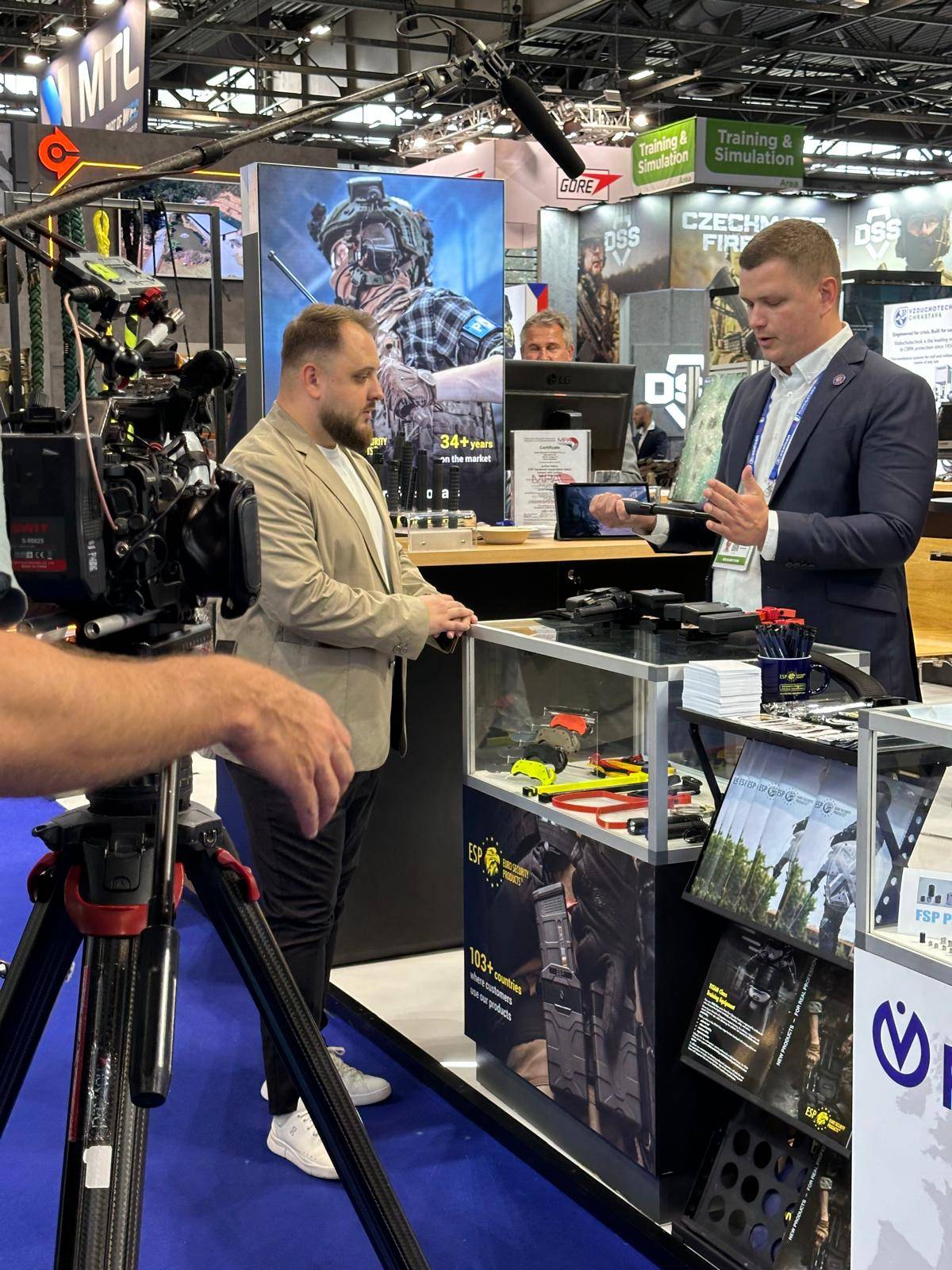 Ondrej Muzika during an interview for Spanish television at Eurosatory 2026 in Paris
Mistake #1: Judging the Product on Day One
A showroom, a demo table, a product photo — all of them show equipment at its absolute best moment: new, clean, undamaged, exactly as designed. That's also the least useful moment to judge it.
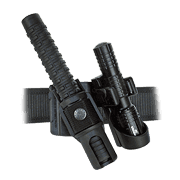
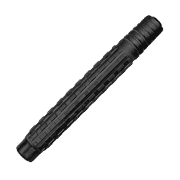
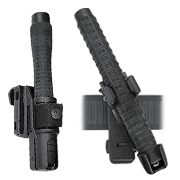
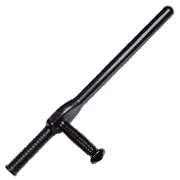
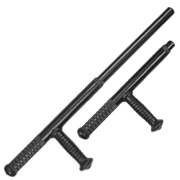
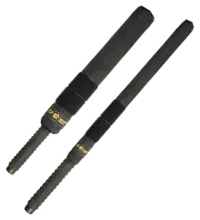
The real question was never “what does this look like now?” It's “what does this look like after a thousand uses?” A telescopic baton that's been dropped a few times, carried through rain, opened and closed a few thousand times over years of duty — that's the version that matters. Almost nothing distinguishes a well-made product from a poorly made one on day one. Almost everything distinguishes them by day one thousand.
A comparison that only tells you about day one isn't really a comparison. It's a snapshot.
Mistake #2: Trusting the Adjective, Not the Number
“Military-grade.” “Heavy-duty.” “Rigorously tested.” These phrases show up on nearly every product page in this category, and they carry almost no information, because none of them are standardized. Nobody enforces what “military-grade” has to mean before a company prints it.
A number is a different thing entirely. A drop height in meters is a claim you can verify. A cycle count before failure is a claim you can verify. A tearing strength in kilograms is a claim you can verify. The moment a manufacturer switches from adjectives to numbers, the comparison becomes real instead of decorative.
The mistake isn't trusting manufacturers. It's accepting language that was never designed to be checked.
Mistake #3: Treating “Certified” as a Single, Binary Fact
Certified by whom, against what standard, tested to what threshold — those three questions turn “certified” from a marketing word into a verifiable fact. Skip them, and “certified” means almost nothing, because certification isn't one thing. A product can be self-certified by the manufacturer, certified against a minimal internal benchmark, or certified by an independent testing body against a recognized external standard. Three completely different levels of assurance, wearing the same word.
“Tested by an accredited materials-testing institute against a national technical standard for telescopic batons” is a specific, checkable claim. “Certified” on its own is not. The gap between those two is exactly where most buyers get misled — not through dishonesty, but through a word doing more work than it's entitled to.
Mistake #4: Comparing One Unit, Not the Production Line
Every comparison — showroom demo, review sample, distributor's display piece — is built around a single, hand-picked unit. That unit tells you almost nothing about the ten-thousandth unit off the same production line, made from a different batch of raw material, assembled by a different shift, months or years later.
A single well-built prototype is achievable by nearly any manufacturer. A production process that delivers the same result consistently, at scale, for years, is a harder problem entirely — and the one that actually determines whether an order of five hundred units performs like the sample everyone was shown, or like five hundred separate experiments.
Experienced procurement teams learn to ask about consistency across units and over time, not just the quality of the one unit in front of them — usually after being burned by it once.
What a Better Comparison Actually Looks Like
None of this requires becoming an engineer. It requires four different questions than the ones most comparisons start with:
- What does this look like after a thousand uses, not on day one?
- What's the number behind the adjective?
- Who certified it, and against what standard?
- Is this one good unit, or a production line that reliably makes good units?
Ask those four, and price stops being the main variable in the comparison. It becomes one input among several — which is where it belongs.
Held to Our Own Four Questions
We manufacture tactical and defensive equipment for professional units, under a standard we've held ourselves to since 1992: proven reliability for professional units worldwide. We make more than expandable batons, but that's the product line where we can show our work most concretely — so that's what follows, measured against the four questions above.
Day one thousand, not day one.
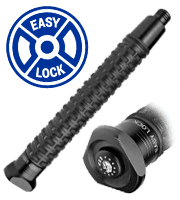
Our Easy Lock telescopic batons are drop-tested from a 2-metre height onto concrete — the German standard itself only requires testing onto wood, a softer surface — and the opening-and-closing mechanism is cycle-tested to 6,000 operations without failure. The locking mechanism is also tested after repeated submersion in mud. That's the day-one-thousand condition, tested before the product ships, not assumed after the fact.
The number behind the adjective.
“Hardened steel” becomes a specific claim once you name the grade: the telescopic tubes are cold-drawn seamless steel, grade C55E (to DIN 17200 / EN 10083), with a grip diameter held to 27.5mm across the range (29.5mm on the longer ExB-23H and ExB-26H) — a tolerance you can measure, not a description you have to trust.
Who certified it, and against what.
The Easy Lock telescopic batons are tested and certified by MPA Hannover, Germany, against the German technical standard for telescopic batons. Our polypropylene straight batons carry a separate certificate, from ITC Zlín in the Czech Republic, against a different standard — because they're a different product made from a different material, and we'd rather tell you which certificate applies to which item than let “certified” cover the whole catalogue. The company also holds ISO 9001 and ISO 14001 certification.
One unit, or a production line.
ISO 9001 and ISO 14001 aren't product certificates — they're audits of the process itself, repeated on a recurring cycle rather than issued once. The steel specification behind these batons has been in continuous production for years, across millions of units, which is also how we're able to export more than 90% of what we make to over 100 countries: that volume only holds up if unit one and the unit made this year perform the same way.
We don't expect you to take our word for any of this. The MPA Hannover testing protocol and the technical directive behind the German standard are documents we can put in front of you, not claims we're asking you to accept on faith — ask your ESP contact for them, or ask the same four questions of any manufacturer you're comparing us against.


